

Jig Head DECOY SV-34
10 in stock
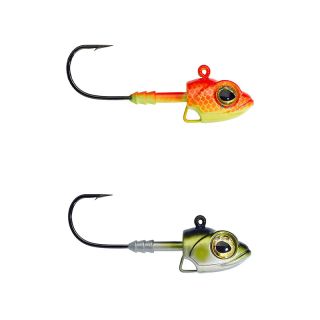
Linear jig heads offer exemplary stability and excellent bottom contact for working your shads on a continuous retrieve. Their balance promotes a steady, vibrating action, perfect for covering areas in saltwater (bass, pollack) as well as freshwater (zander, perch, pike). Available in multiple weights and hook sizes, they ensure a precise presentation at the target depth.
Add to my wishlist "Jig Head DECOY SV-34"

Add to my wishlist "Jig head BERKLEY Deep jig head olive pearl"
Add to my wishlist "Jig head MADNESS Bakuree head"
Add to my wishlist "BERKLEY Flex Deephead Jig Head"

Add to my wishlist "BERKLEY deep jig head fluorescent orange"
Add to my wishlist "Jig head SCRATCH TACKLE Oval classic jig head"
Add to my wishlist "ADAMS GTX FW Jig Head"
Add to my wishlist "Jig head XORUS Ultimate eel mat"
Add to my wishlist "Jig head XORUS Ultimate eel evo"
Add to my wishlist "BERKLEY Powerjig All Round jig head"
Add to my wishlist "REINS Rockvibe Jighead"
Add to my wishlist "Jig head FOX RAGE Eel head"
Add to my wishlist "GUNKI G´Rider Jig Head"
Linear fishing is one of the most refined and effective techniques for targeting predators, whether saltwater or freshwater. It involves animating the soft lure continuously and steadily, maintaining permanent contact with the bottom. The aim: to imitate the natural swimming motion of a small fish on the move, often injured or fleeing. In this approach, the linear jig head plays a central role — it determines the depth, swimming speed, and stability of the lure.
The linear jig head is specially designed to provide a balanced descent and a stable retrieve. Its forward centre of gravity keeps the lure horizontal, preventing it from nosediving or drifting off course. At sea, this precision is essential for targeting bass over rocky or sandy areas, where every contact with the bottom can trigger a strike. In freshwater, it allows you to effectively target zander, perch, or pike, simply by adjusting the weight to the depth and retrieve speed.
For linear fishing, the right weight depends on depth, current, and lure type. A head that is too light will not sink fast enough and will blur the action; too heavy, and it will dampen the shad's vibrations. As a general rule, use 5 to 15 g for calm freshwater areas and 20 to 40 g for coastal fishing. The goal is to feel the bottom without getting stuck on it, so the shad stays lively and reactive.
Brands such as Berkley, Xorus or Decoy have designed linear jig heads of remarkable precision. Their models stand out thanks to a carefully crafted hydrodynamic profile, ultra-sharp BKK or Decoy hooks, and reliable lure-retention systems. Some even incorporate technical details — offset eyelets, anti-slip lugs, durable paint — that ensure a long-lasting and attractive rig.
Linear fishing appeals to beginners and experienced anglers alike. Easy to learn, it relies on a slow, steady rhythm, yet demands precision and feel. By choosing the right linear jig head, the right weight and a suitable lure, every cast becomes an opportunity: whether drifting at sea or working a drop-off in a river, this minimalist yet devastatingly realistic approach can seduce all active predators — from bass to zander and pike.
check_circle
check_circle